What is a Drafting Chair?

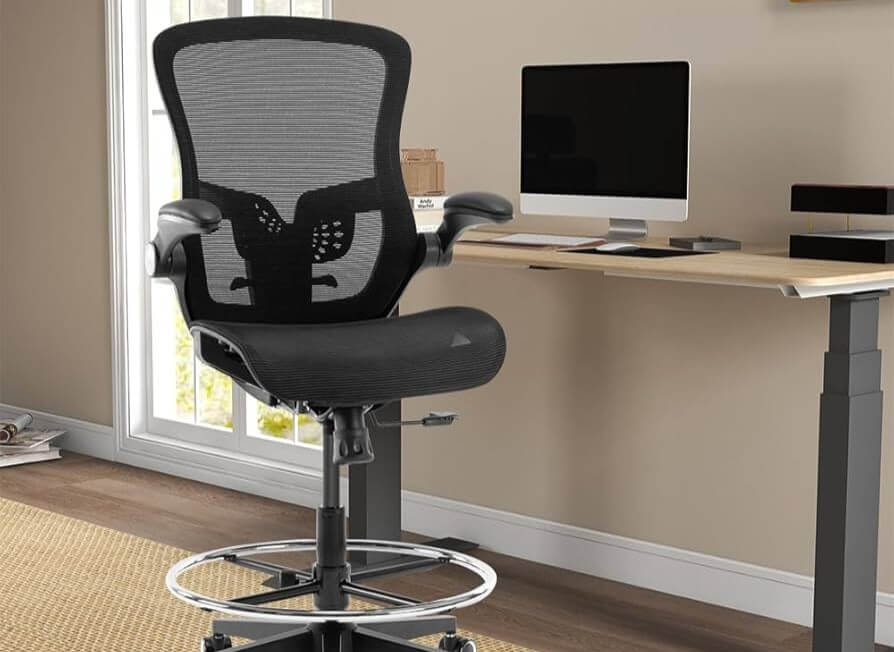
A drafting chair is a specialized office chair designed for work at elevated surfaces such as drafting tables, standing desks, and counter-height workstations. Unlike standard office chairs, drafting chairs feature extended height adjustment ranges and integrated footrests to accommodate higher work surfaces while maintaining proper ergonomic support.
At BKM Office Furniture, you can find high-quality drafting chairs in our office chair collection.
The primary distinguishing feature of a drafting chair is its extended cylinder that allows the seat to rise significantly higher than traditional office chairs. While standard office chairs typically adjust between 16-21 inches from the floor, drafting chairs often offer adjustment ranges of 10 inches or more, with many models reaching seat heights of 24-34 inches. This extended range enables users to align properly with work surfaces that sit 37-42 inches high.
Drafting chairs often come with a foot ring or footrest, giving users a place to rest their feet while maintaining proper posture. This circular or D-shaped metal ring surrounds the chair base and prevents legs from dangling when seated at elevated positions. Without this support, pressure accumulates in the upper legs, leading to discomfort and poor circulation during extended work sessions.
Despite their taller design, quality drafting chairs maintain the ergonomic features found in premium office seating. These include adjustable backrests and lumbar support, ensuring users maintain proper spinal alignment regardless of their workstation height. Many models also include adjustable armrests, swivel functionality, and casters for mobility.
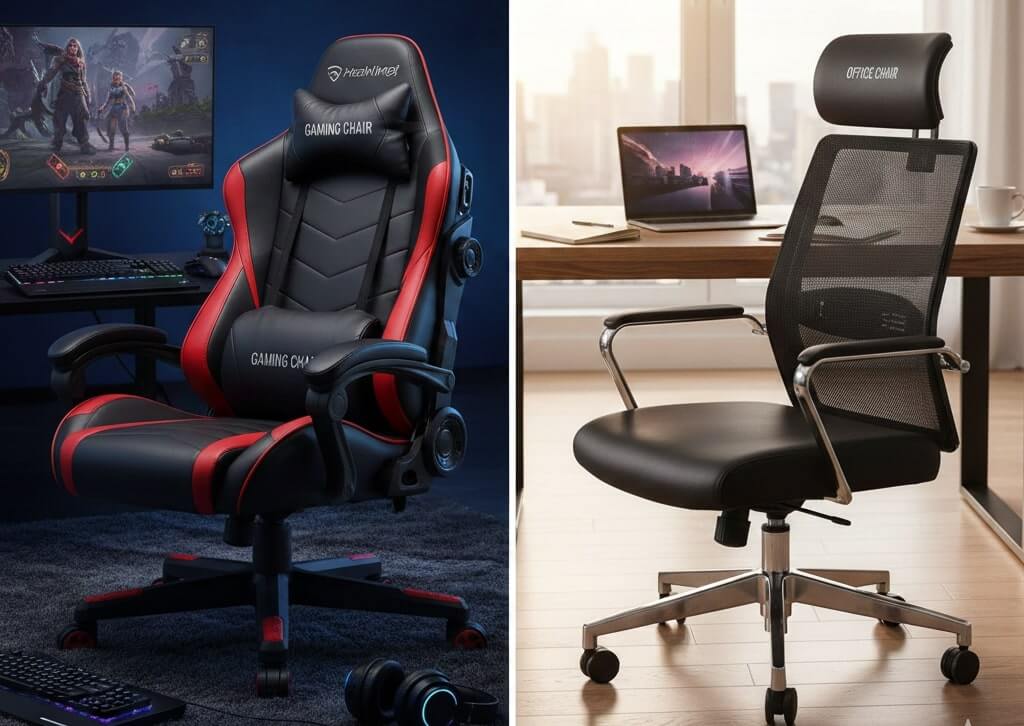
Understanding the distinction between drafting chairs and standard office chairs helps determine which seating solution fits your workspace needs.
Height Capacity: Standard office chairs are built for desk heights of 28-30 inches, while drafting chairs are specifically designed for counters, drafting tables and sit-stand desks.
Footrest Integration: Drafting chairs often include a foot ring or platform to provide additional support at higher seating positions, a feature typically absent in standard office chairs.
Seat Design: Drafting chairs frequently feature deeper seat pans and slimmer profiles to accommodate forward-leaning postures common in technical work, while office chairs optimize for upright sitting positions.
Architects, engineers, lab technicians, and artists working at drafting tables or laboratory benches benefit most from drafting chairs. These professionals require comfortable seating that matches their specialized work surfaces without compromising posture or causing strain.
As adjustable-height and standing desks have gained popularity, drafting chairs have found new relevance. They provide an ideal seating option for users who transition between sitting and standing throughout the day, offering the height flexibility needed to match various desk positions.
Employees in retail environments, reception areas, laboratories, and other settings with elevated counters or workstations require seating that reaches appropriate heights while maintaining comfort and professional appearance.
Before selecting a drafting chair, measure your work surface height. The ideal chair height should position you approximately 8-12 inches below your work surface. For a 42-inch counter, look for chairs with seat heights reaching 30-34 inches.
Priority features include:
Materials significantly affect feel and durability—while mesh allows air circulation to ensure breathability, leather is more durable and comfortable. Test seat depth and width, as standard dimensions of 17-20 inches work for most users but personal preference varies.
Swivel bases and casters enable easy movement between workstations, an important factor in dynamic work environments. However, stationary bases may be preferable in settings requiring stability during precision work.
Drafting chairs allow more height adjustments than regular ergonomic office chairs, with features that ensure minimal strain on legs and lower back. The combination of proper height positioning, integrated foot support, and lumbar reinforcement creates a seating solution that promotes healthy posture during extended work periods.
Proper ergonomic setup with a drafting chair reduces common workplace discomforts. When adjusted correctly, the chair allows users to maintain neutral wrist positions, relaxed shoulders, and supported lower backs—even at elevated work surfaces that would otherwise cause strain.
A drafting chair represents a specialized seating solution designed specifically for elevated work environments. While they share ergonomic principles with standard office chairs, their extended height capacity and integrated footrests make them uniquely suited for drafting tables, standing desks, and counter-height workstations.
The investment in a quality drafting chair pays dividends in comfort, productivity, and long-term physical wellbeing for anyone working regularly at elevated surfaces. Whether you’re an architect at a drafting table, a laboratory technician at a high bench, or an office worker using a standing desk, selecting the right drafting chair ensures your workspace supports rather than strains your body.
At BKM Office Furniture, we understand that the right seating makes the difference between an exhausting workday and a productive one. When choosing your drafting chair, prioritize adjustability, ergonomic support, and build quality to ensure years of comfortable, efficient work at any height.